Happy 697th to the Ming Founder!

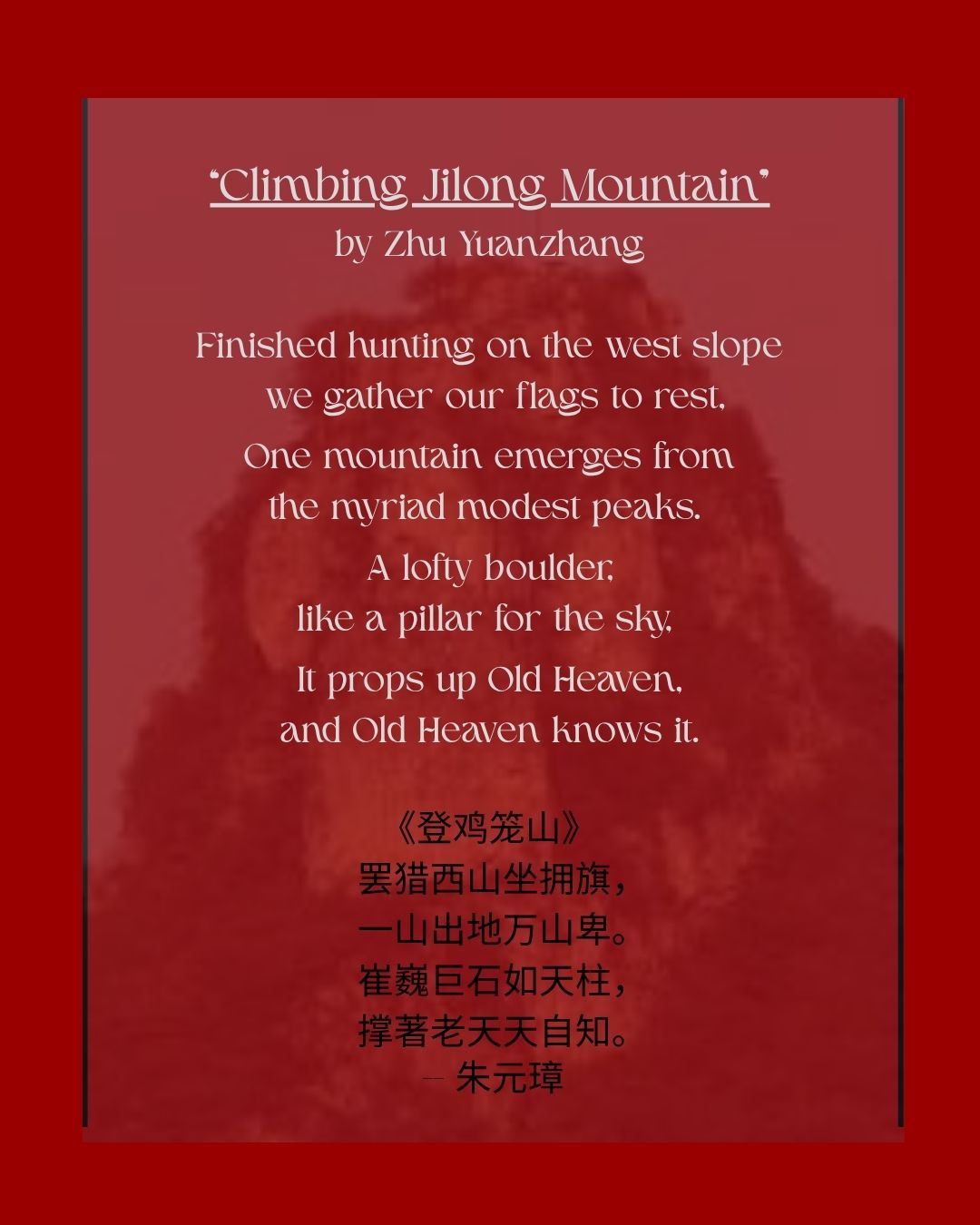
Poem in English and Chinese, "Climbing Jilong Mountain"

October 21, 2025, marks the 697th birthday of Zhu Yuanzhang, founder of China’s Ming Dynasty. He was born (on what corresponds to Oct. 21 on our modern calendar) in 1328, founded the Ming Dynasty in 1368, and died in 1398. Those lucky eights seem auspicious except that they are based on the Western Gregorian calendar and would have meant nothing to Zhu Yuanzhang himself. In the context of his era, he was born in an Earth Dragon year on the 18th day of the 9th month of the 1st year of the Tianli 天曆 reign of the Mongol Yuan Dynasty’s Wenzong 元文宗 Emperor Tugh Temur.

However you cite it, we are a mere three years from the big 700!

To mark this day, here’s a poem that is attributed to Zhu Yuanzhang. Written in 1355, it’s titled “Climbing Jilong Mountain” and describes the view of a summit near today’s Hexian, Anhui Province, located along the northern banks of the Yangtze River:

Continue reading

The anthem of the Red Turban Rebellion

It’s an incendiary lyric with no title by an anonymous author. I consider it the anthem of the Red Turban rebellion because it describes, in catchy rhyming phrases, the political and economic breakdown that toppled the Mongols in 14th-century China.

This was the same rebellion that Zhu Yuanzhang joined and eventually led, fighting his way from Anhui Province south across the Yangtze River to the city known today as Nanjing, where he established the dynasty that replaced the Mongol Yuan: the Great Ming.

According to the scholar Tao Zongyi 陶宗仪, who lived through this era, the song was soon on everyone’s lips.  He included the words in his vast collection of anecdotes, noting “I don’t know who created this lyric to the Zui Tai Ping tune, but from the capital to Jiangnan, everyone can recite it.” (《醉太平》小令一阕,不知谁所造。自京师以至江南,人人能道之。)

Continue reading

Crossing the river

Though I’m not into numerology, it did give me pause to realize that one of the key moments in the founding of the Ming Dynasty occurred exactly 666 years ago.

On the second day in the sixth month of an Yiwei year that corresponds to the Western date of July 10, 1355, Zhu Yuanzhang led his newly-acquired fleet from Hezhou, his temporary base on the northwest bank of the Yangzi River. He was headed toward a outcrop on the far shore known as Ox Barrier. One of Zhu’s newest recruits, Chang Yuchun, was the first to make landfall. Chang jumped to the shore, wielded his ax and rushed toward the Mongol troops. Zhu Yuanzhang’s Red Turbans surged behind Chang’s charge and routed the imperial army from their fort in the cliffs. Chang’s attack was so heroic that it is said you can still see his footprint in the boulders above the site of the landfall.

Such are the tall tales told of that fateful moment.

Continue reading

The impact of the Black Death on 1300s China: No plague = no Ming

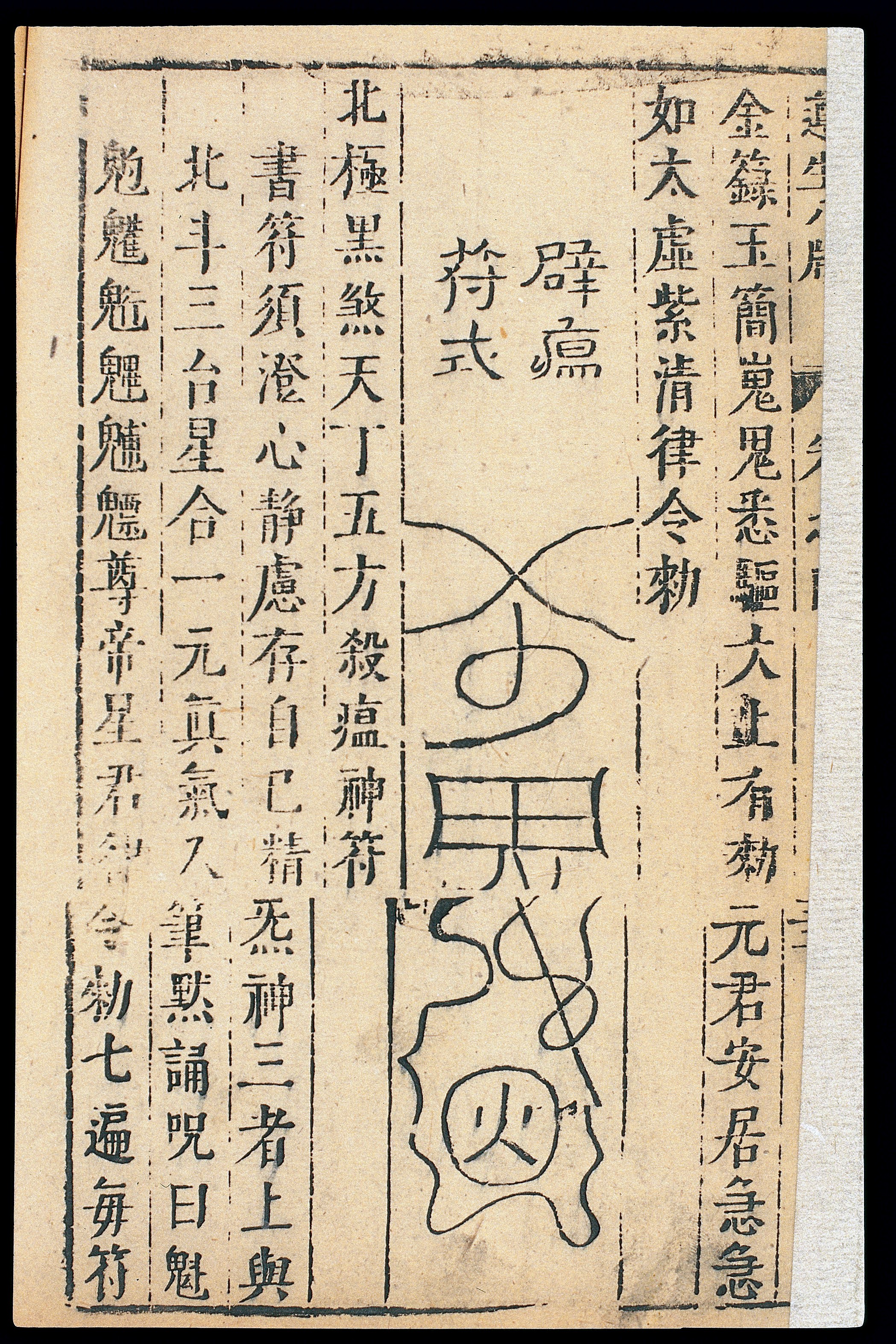
PlaguePreventionTalisman
19th-century woodcut with a talisman for warding off the plague. (4/19/2020 Twitter post by Medieval Asia researcher Jeffrey Kotyk)

If not for the plague, China wouldn’t have a Ming Dynasty.

This startling thought has been on my mind as I sit at home in quarantine, enduring the epidemic of my era: COVID19.

Of course, if the Ming had not been founded in 1368, some other dynasty would have followed Kublai Khan’s Mongol Yuan. Perhaps the salt smuggler Zhang Shicheng would have prevailed with his Great Zhou Dynasty based in the city of Hangzhou (which the Ming founder squashed in 1367). My point is that the plague is what propelled the Ming founder onto the path that led to the founding. It is the single incident that pushed him off his expected trajectory of farming alongside his brothers in the fields along the Huai River. Zhu Yuanzhang was the youngest of four sons. If not for the plague, he would never have left his large family, which needed him in the fields. He death would have been unremarkable and we would know nothing about him. Continue reading

Publishing in a pandemic…

I am starting to feel like a case study in how not to time your book release.

First, I stretched out the manuscript editing process so that my debut novel release date planned for late 2019 was postponed to February 1, 2020. It’s a nice date, except that my publisher is located in China, with a printing press in Hong Kong that closed down right about then to combat COVID-19.

Next, I held off on book promotion in the U.S., where I live, to allow time for getting the book printed.  “Let’s give it six weeks,” I decided.  That timed my first mid-March book promotion gig for the exact moment when things started to shut down around me in Wisconsin. Continue reading

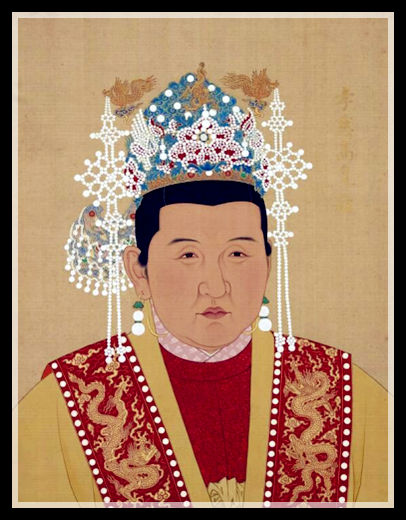
Happy Birthday Empress Ma!

孝慈高皇後馬氏,生日快樂!
Happy 687th birthday to Empress Ma!
She was born (on what corresponds to August 9 on our modern calendar) in 1332, married in 1352, and died in 1382. To be more specific, she was born in a Water Monkey year on the 18th day of the 7th month of the 3rd year in the Zhishun 至順 reign of the Mongol Yuan Dynasty’s Wenzong 元文宗 Emperor Tugh Temur.
Continue reading

Why does this text matter? (Part 2 – The Monk Years)

LongXingStatute
Statue of Zhu Yuanzhang in the Anhui temple that claims him as a member of its fold.

Zhu Yuanzhang 朱元璋 is famous as the peasant-turned-rebel who defeated the Mongols and founded the Ming Dynasty in 1368.  However, prior to tying on a red turban and joining the rebellion, Zhu spent eight formative years as a Buddhist monk.  It is these years that are the focus of the middle third of the Imperial Tomb Tablet of the Great Ming 大明皇陵之碑.  Understanding how the Ming founder’s religious beliefs guided his path to the throne is another reason why this text matters.

To recap: after losing his entire family to a plague strike and its aftermath, the orphaned 16-year-old Zhu would have hardly looked like a future emperor.  In fact, he ranks as China’s most unlikely dynastic founder.  Continue reading

Why does this text matter? (Part 1 – The Grieving Son)


Huanglilng Statue
Stone guardian at Imperial Tomb Tablet site.

It’s an old text that is virtually unknown in English. So why bother reading the Imperial Tomb Tablet of the Great Ming?

My answer is that it’s a rare insight into the anguished heart of a remarkable man, the only peasant who founded a dynasty in imperial China.

And I think anyone who has a family should take a look at these words, because this is a speech by a son standing with his back to his parents’ graves and his face toward posterity, trying to express how his life has given meaning to his surname.  What would you say if faced with such a task? Continue reading

Lines 11-20

(In this 2nd section of the Huangling Bei 皇陵碑, Zhu Yuanzhang is still reeling from the aftermath of burying his parents and oldest brother.  Click here to see the previous section.  Also – click on any line number to see complete annotations of each section.)

Line 11: 既葬之后,家道惶惶.  After the burial, the path before us was fraught with suffering and worries.

Line 12: 仲兄少弱,生計不張.  My second brother (now head of the family) was young and frail, with no livelihood to depend on.

Line 13: 孟嫂攜幼,東歸故鄉.  Eldest sister-in-law had taken her children in hand and headed east to return to her own village. Continue reading